Process
Before We Begin
A few things worth knowing before a space takes shape.
01 — The Beginning
How does a project begin with KYO?
Every project begins with a conversation. We take the time to understand your vision, the space, and the way you live or work.
From there, we explore ideas, materials and possibilities, shaping a direction that feels natural, intentional and uniquely yours.
Start a conversation
Process
Before We Begin
A few things worth knowing before a space takes shape.
Process
Before We Begin
A few things worth knowing before a space takes shape.

Chapter
01 / 04
01
The Beginning
01
How does a project begin with KYO?
Every project begins with a conversation. We take the time to understand your vision, the space, and the way you live or work. From there, we explore ideas, materials and possibilities, shaping a direction that feels natural, intentional and uniquely yours.
Start a conversation
02
What types of spaces do you design?
Private homes, retreats and apartments, alongside a small number of tea rooms, restaurants and boutique hotels. Scale matters less than intention: we take on projects where there is room to think carefully.

Start a conversation
03
Do you take on smaller projects?
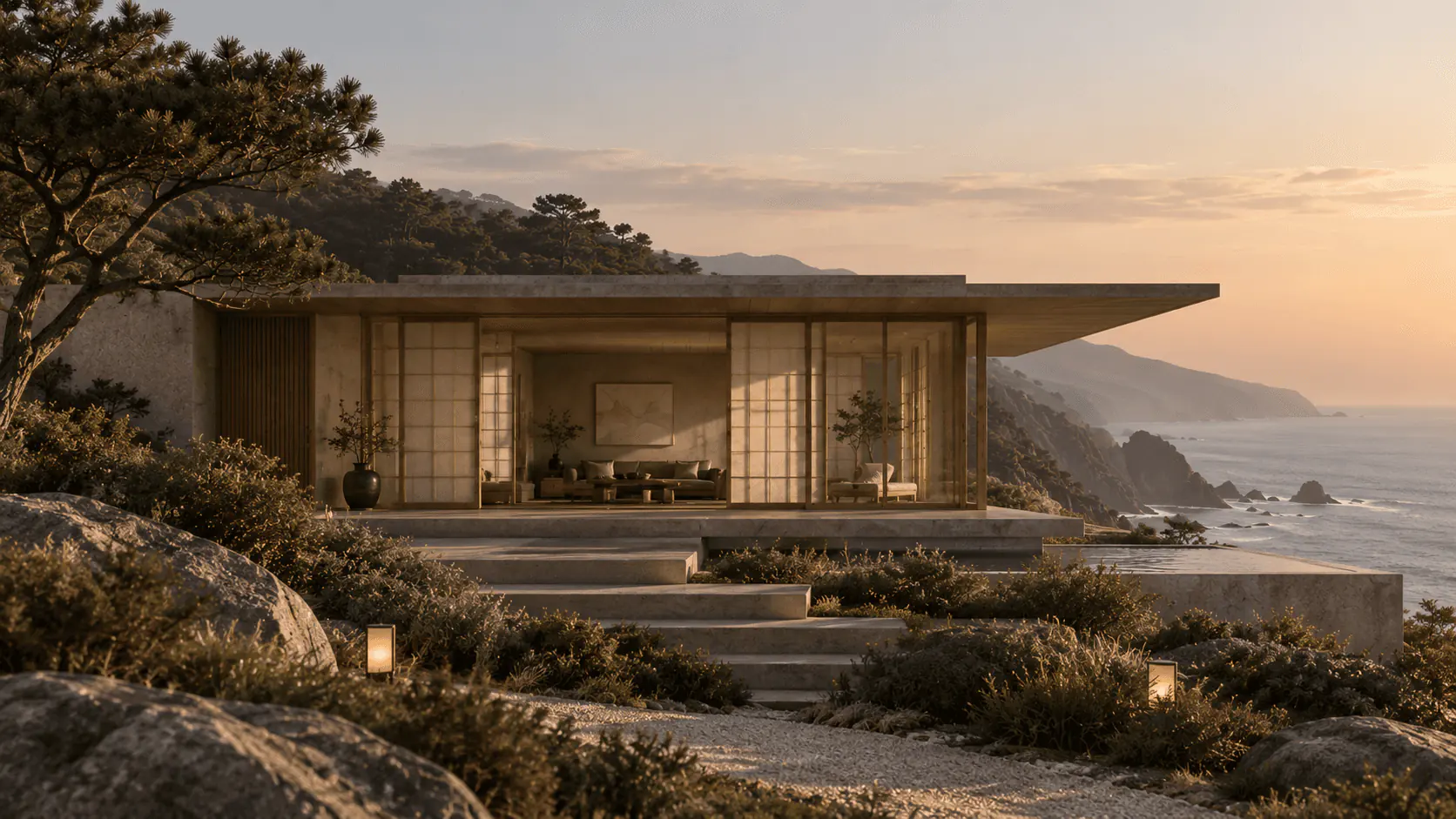
Yes — a single room, a tea corner, a bathroom of stone and light. Some of our most meaningful work is small. What matters is the care it deserves, not the number of square metres.
Start a conversation
04
When should I contact you?
As early as possible — ideally before plans are fixed or land is chosen. The earlier we are involved, the more naturally light, space and materials can be shaped together.

Start a conversation

Chapter
02 / 04
02
The Process
01
What happens after the first conversation?
Every project unfolds differently. We work through a considered process of discovery, concept, material selection, development and refinement — allowing the space to evolve naturally rather than forcing it into a fixed formula.
Start a conversation
02
How long does a project take?
A considered interior usually takes six to twelve months. A new home, from first sketch to completion, often takes eighteen months to two years. We share a realistic timeline after our first conversations.

Start a conversation
03
How involved will I be?
As involved as you wish. We share drawings, samples and material boards at every stage, and key decisions are always made together. Between those moments, we take care of the details so you don’t have to.

Start a conversation
04
Do you work with existing architects or contractors?
Often. We collaborate easily with architects, engineers and builders already involved, or introduce trusted partners from our own network. What matters is a shared respect for detail.

Start a conversation

Chapter
03 / 04
03
The Details
01
What is the typical project investment?
Each project is shaped by its scale, materials and level of craft, so there is no fixed figure. After our first conversation we share a considered estimate and a clear design fee, so decisions can be made with confidence.
Start a conversation
02
Do you work with existing buildings?
Many of our favourite projects begin with an existing structure. We look for what is worth keeping — old timber, thick walls, the way light already falls — and design around it.

Start a conversation
03
Can materials and finishes be customized?
Always. Limestone, oak, clay plaster and linen are chosen for each space, and we work with artisans who make pieces by hand — so surfaces feel specific to the place rather than selected from a catalogue.

Start a conversation
04
Do you work internationally?
Yes. Our studios are in Barcelona and Tokyo, and we work with clients across Europe, Asia and beyond. Early stages happen remotely; we visit the site at key moments and work with trusted local craftspeople.

Start a conversation

Chapter
04 / 04
04
The Philosophy
01
What does KYO mean?
KYO comes from kyō — the Japanese word for ‘today’. It reminds us to design for the life that is lived now: daily rituals, quiet mornings and the ordinary moments a home holds.
Start a conversation
02
What is wabi-sabi?
A Japanese way of seeing beauty in what is imperfect, impermanent and incomplete. In a home it means natural textures, softened edges, and materials that grow more beautiful as they age.

Start a conversation
03
Why is negative space important?
Ma — the space between things — is what gives a room its calm. When surfaces are left open and rooms uncrowded, light, shadow and the objects you love can finally be seen.

Start a conversation
04
How do you approach materiality?
We begin with touch. Oak, stone, clay and linen are chosen for how they feel under hand and foot, how they hold light, and how they will look in twenty years.

Start a conversation
The Next Step
Ready to begin your own space?
Tell us about the place you have in mind. We listen first, then shape a direction together — at your pace, with care for every detail.
Start a conversation